Virtual Reality Google Cardboard
Like the Google Cardboard team, and why the cardboard helmet of virtual reality has become an innovation.
David Koz worked at the Google Paris office, NASDAQ: GOOG, but his dream was working at the main office in the Creme Valley. Last spring Koz, a French man of origin, got to Google headquarters in Mauntin-Wu, hoping to discuss a new project with someone who'll listen. Koz says, " I came with a prototype in my arms and a bag of things, and I found 10 or 15 people. " One of them was Christian Plagemann, a Google researcher who was studying new interfaces for appliances of household electronics. Although these two have never met before, Koz showed Plagemann a prototype: Virtual reality pointsmade from the cardboard. Plagemann was intrigued and took care of the witty thing to pay attention to important Google people, including Director General Larry Paige and Vice-President of the Soundar Picha Engineering Line. Plagemann remembers:
“I convinced him to leave me one of the boxes. He went back to Paris, and I started showing his invention to everyone around.”
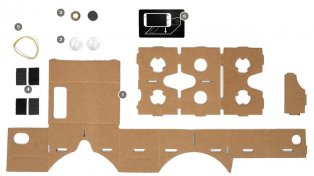
Two months later, Picai presented a project at the opening of the annual Google Conference in San Francisco, and company employees were handing over cardboard garments to thousands of coders on the way out of the hall. It was a little weird for a conference at a level where Google usually distributes phones, tablets and other e-drops for millions of dollars. But in that year, it was an unexpected primitive device - some cardboard that turns around a conventional smartphone screen - that launched a radical virtual reality project, giving Google the opportunity to build on the area that is about to turn the world of high technology.


